Venezuela Intervention: Strategic Necessity or Dangerous Precedent?
Analyzing the U.S. Military Operation of January 3, 2026 and Its Implications
STRATEGYINTELLIGENCE
Matt Kavgian
1/7/20267 min read
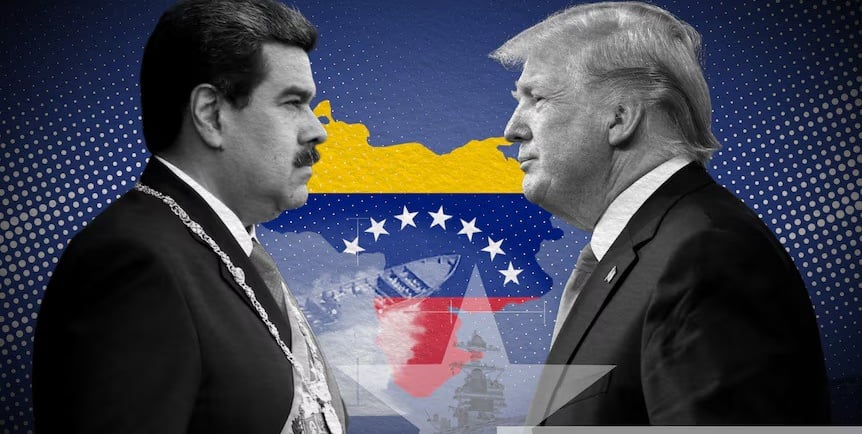
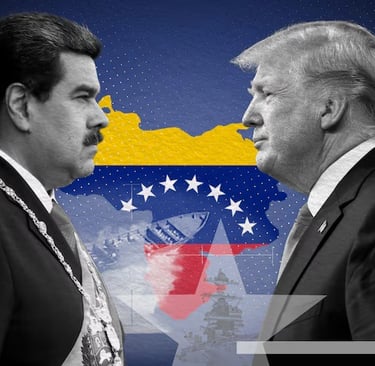
The January 3, 2026 U.S. military operation that resulted in the capture of Nicolás Maduro represents one of the most consequential, and controversial, American foreign policy actions in recent decades. As the international community grapples with the implications, it's essential to understand both the strategic rationale behind the intervention and the concerns it raises about international norms and precedent.
The Strategic Case: Why Now?
The Legitimacy Question
Supporters of the intervention emphasize a fundamental point: Maduro's claim to power lacks democratic legitimacy. The July 2024 presidential election was widely condemned as fraudulent, with the opposition producing detailed voting records showing their candidate, Edmundo González, won decisively. Multiple countries, including the United States, refused to recognize Maduro's claimed victory. When a leader holds power through electoral fraud and violent repression, supporters argue, traditional notions of sovereignty become complicated.
The United States and other nations have maintained that González represents Venezuela's legitimate government-in-exile. From this perspective, the intervention wasn't overthrowing a legitimate leader but rather enforcing the will of the Venezuelan people against an authoritarian usurper.
The National Security Dimension
Beyond the legitimacy question, U.S. officials point to concrete national security threats:
Drug Trafficking and Transnational Crime: Venezuela has become a major transit point for narcotics flowing into the United States, with the Maduro regime allegedly complicit in (or profiting from) drug trafficking operations.
Mass Migration: Political and economic collapse in Venezuela has generated one of the world's largest refugee crises, with over 7 million people fleeing the country. This creates humanitarian challenges and regional instability affecting U.S. interests throughout the hemisphere.
Hostage-Taking: Americans have been detained in Venezuela and used as bargaining chips, creating what some characterize as a pattern of state-sponsored kidnapping.
The Geopolitical Chess Board
Perhaps most significantly, Venezuela's deepening alignment with U.S. adversaries presents strategic concerns that extend far beyond the Western Hemisphere:
Chinese Economic Penetration: China has invested billions in Venezuelan infrastructure, oil, and mining operations, gaining preferential access to critical resources. Venezuela's vast oil reserves (the world's largest proven reserves) and significant deposits of rare earth minerals including lithium, coltan, and gold make it strategically valuable for global supply chains and energy security.
Russian Military Cooperation: Russia has provided military equipment, training, and intelligence support to the Maduro regime, establishing a military foothold in the Western Hemisphere that challenges the Monroe Doctrine's spirit if not its letter.
Iranian Presence: Iran and its proxy Hezbollah (and other malign actors such as Hamas) have used Venezuela as a base for expanding their influence in Latin America, including weapons transfers and intelligence operations.
Cuban Intelligence Operations: Cuba's extensive intelligence and security apparatus has been deeply embedded in Venezuela's military and security services, essentially making Venezuela a client state.
This convergence of adversarial powers in America's backyard represents what supporters call a clear and present danger to U.S. security interest, not a distant geopolitical concern but a direct challenge within our own hemisphere.
The Strategic Warning Imperative
Perhaps most alarming from a national security perspective is Venezuela's geography combined with its adversarial alignments. Located less than 1,500 miles from Miami and sharing maritime boundaries in the Caribbean, Venezuela represents what defense analysts call "denied geography", territory from which hostile powers could project force with devastating effect.
The establishment of military cooperation agreements and potential basing arrangements with Russia, China, and Iran creates several acute threats:
Compressed Response Time: Should weapons of mass destruction or disruption, including hypersonic missiles, electromagnetic pulse weapons, or advanced cyber warfare capabilities, be staged from Venezuelan territory, the warning time available to U.S. defense systems would collapse to minutes rather than hours. Traditional early warning infrastructure designed to detect threats from across oceans becomes far less effective when adversaries operate from within our own hemisphere.
Surveillance and Intelligence Collection: Venezuela's position provides adversarial powers with optimal platforms for electronic surveillance of U.S. military communications, space launch facilities in Florida, and commercial shipping through the Caribbean and Panama Canal. Chinese signals intelligence facilities in Venezuela could monitor U.S. military readiness and operations in real-time.
Naval and Air Access Denial: Russian or Chinese naval vessels operating from Venezuelan ports could threaten critical sea lanes, disrupt commerce, and complicate U.S. power projection throughout the Caribbean and South Atlantic. Advanced air defense systems could create anti-access/area denial (A2/AD) zones affecting U.S. military freedom of movement.
Hybrid Warfare Launch Point: Venezuela could serve as a staging ground for cyber attacks, information warfare, sabotage operations, and coordination with proxy forces throughout Latin America, all while maintaining plausible deniability for the sponsoring powers or their proxies.
Strategic Encirclement: Combined with Russian presence in Cuba, Chinese investments throughout Central America, and growing influence in other regional nations, Venezuela represents a key node in what some analysts characterize as strategic encirclement (i.e., adversarial powers establishing presence around U.S. periphery to constrain American freedom of action).
This is not theoretical threat inflation. Russia has previously deployed strategic bombers to Venezuela, conducted joint military exercises, and discussed establishing permanent military facilities. China has invested heavily in Venezuelan telecommunications infrastructure, raising concerns about embedded surveillance capabilities. The convergence of these developments represents a fundamental shift in hemispheric security that some officials argue required decisive action before the strategic window closed entirely.
The Critical Natural Resources Factor
While talk of oil is leading the narrative, an underappreciated dimension of Venezuela's strategic importance should not be overlooked:
Rare Earth Minerals: Venezuela possesses significant deposits of minerals critical for modern technology, defense systems, and renewable energy infrastructure. Chinese control over these resources through debt-trap arrangements could give Beijing leverage over global supply chains.
Lithium and Battery Materials: As the world transitions to electric vehicles and renewable energy storage, Venezuela's mineral wealth becomes increasingly strategic. Allowing adversarial powers to monopolize these resources could undermine U.S. economic competitiveness and energy independence.
Agricultural Potential: Venezuela's territory and climate could support significant agricultural production, yet the country faces food insecurity due to mismanagement. Restoring productive capacity could help address regional food security and provide employment to minimize migration flows that create regional instability.
The Legal and Constitutional Framework
Supporters of the operation point to several legal justifications:
Executive Authority: The President has inherent constitutional authority to protect national security, particularly against threats involving drug trafficking, terrorism, and protection of American citizens.
Congressional Authorization May Not Be Required: Operations short of declared war have historically been conducted under presidential authority, particularly when time-sensitive and limited in scope.
International Law Complexity: When a regime lacks democratic legitimacy and commits crimes against humanity, traditional sovereignty principles become murky. Some argue the international community has a "responsibility to protect" populations from mass atrocities.
Self-Defense and Regional Security: The accumulation of threats (e.g., narcotics, terrorism, mass migration, adversarial military presence) could potentially be characterized as justifying defensive action under international law.
The Path Forward: Ensuring Democratic Restoration
If the goal is restoring democracy and justice in Venezuela, several elements appear critical:
Legitimate Transitional Authority: Recognizing González or a broad-based transitional government that represents the Venezuelan people's electoral choice from 2024.
Free and Fair Elections: International supervision of genuinely democratic elections with proper safeguards against fraud and intimidation.
Accountability: Prosecution of those responsible for crimes against humanity, potentially through international tribunals or hybrid courts, ensuring justice for victims.
Economic Reconstruction: Massive international aid will be necessary to rebuild institutions, restore services, and address humanitarian needs, potentially requiring a Marshall Plan-scale commitment.
Regional Stabilization: Coordinated efforts with Latin American partners to address refugee flows, security challenges, and economic integration.
Preventing Power Vacuums: Ensuring organized crime, militias, or adversarial powers don't exploit instability during the transition.
Concerns and Counterarguments
Despite the strategic rationale, the operation raises concerns that cannot be dismissed:
International Law Violations: The UN Charter prohibits the use of force against another nation's territorial integrity. The UN Secretary-General and Security Council have condemned the action. Even if Maduro is illegitimate, unilateral military intervention sets a dangerous precedent.
Sovereignty and Self-Determination: Who decides which governments are legitimate enough to be protected from intervention? If the U.S. can unilaterally act in Venezuela, what prevents other powers from doing likewise elsewhere using similar justifications? However invalid comparisons might be, it is easy to see how Russia and China could use this to their advantage in current (Ukraine) or future (Taiwan) conflicts.
Congressional Authority: The War Powers Resolution exists precisely to ensure congressional input on military operations. Bypassing this process, regardless of legal interpretation, raises separation of powers concerns.
Civilian Casualties and Humanitarian Impact: Any military operation risks civilian harm. Early reports suggest casualties occurred, though full details remain unclear.
Regional Relations: Latin American nations, even those opposing Maduro, may view U.S. military intervention as unacceptable imperialism, damaging long-term diplomatic relationships.
Mission Creep: What begins as a limited operation could evolve into prolonged occupation or nation-building, repeating mistakes from Iraq and Afghanistan.
Domestic Division: The American public is deeply divided, with polls showing roughly equal numbers supporting and opposing the action. Major military commitments typically require broader national consensus.
A Moment of Reckoning
The Venezuela intervention forces fundamental questions about American power, international order, and the tension between sovereignty and human rights in the 21st century.
Those supporting the operation see a decisive moment when the United States acted to eliminate a threat to national security, restore democracy to a suffering population, and counter adversarial powers gaining strategic footholds in our hemisphere. They argue that Maduro's illegitimacy, combined with concrete security threats and humanitarian catastrophe, created unique circumstances justifying action.
Critics see a dangerous precedent that undermines international law, revives imperial patterns the United States supposedly abandoned, and risks entangling America in another open-ended foreign commitment without clear objectives or exit strategy.
Both perspectives contain valid points. Venezuela under Maduro did represent a multifaceted threat to U.S. interests and regional stability. The convergence of drug trafficking, mass migration, adversarial military presence, and control over strategic resources created legitimate security concerns. Maduro's regime was demonstrably illegitimate and brutal.
Yet the manner of intervention (unilateral military action without clear international authorization or broad congressional support) raises questions about the rules-based international order the United States has championed since World War II. If might makes right, and powerful nations can overthrow governments they deem illegitimate or threatening, what prevents chaos in the international system?
Conclusion
The coming months will reveal whether this intervention represents a turning point toward Venezuelan democracy and regional stability, or whether it becomes another cautionary tale about imperial hubris.
Success will require not just removing Maduro, but building legitimate institutions, restoring economic functionality, achieving justice for victims, and maintaining international support for Venezuela's democratic transition. It will require the United States to commit substantial resources and political capital to reconstruction, not just regime change.
The intervention has occurred. The debate about its wisdom will continue for years. But the urgent question now is: What comes next? Can the international community, including skeptical allies, unite behind Venezuela's democratic restoration? Can the United States avoid the pitfalls of previous interventions? Can Venezuelans themselves take ownership of their democratic future?
These questions don't have easy answers, but they will define whether January 3, 2026 is remembered as the beginning of Venezuela's democratic renaissance or as another example of good intentions leading to unintended consequences in the complex landscape of international relations.
The stakes extend far beyond Venezuela. How this situation unfolds will shape perceptions of American power, the viability of international law, and the balance between sovereignty and intervention for decades to come.
© 2025. All rights reserved.